SwordSlash
- 4.7
- Rating
- 1.00M
- Installs
- Free
- Price
 Analysis by App-foxy
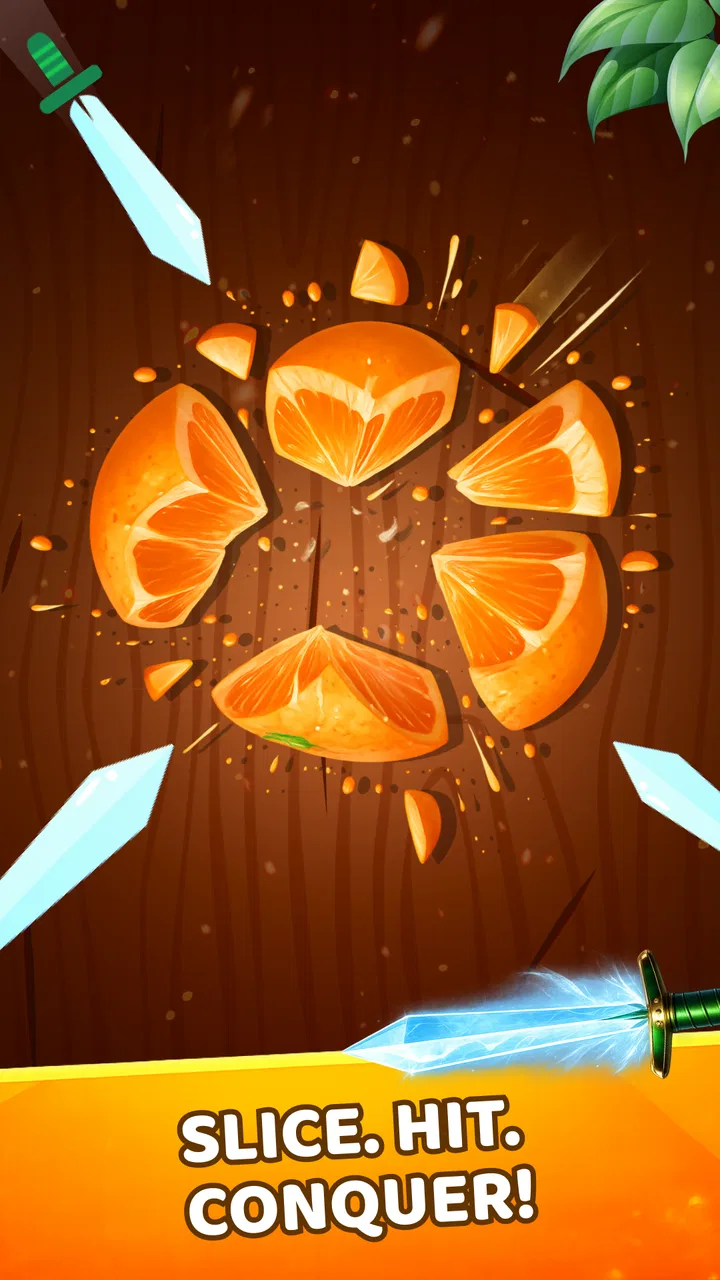
I went into SwordSlash expecting a quick arcade distraction, and that is exactly where it works best. It is a compact sword-slicing game from Hide Seek, built around one simple idea: make every swipe matter. The controls are easy to understand almost immediately, but the timing becomes more demanding once I stop treating each slash as a random gesture and start thinking about position, rhythm, and what I might need to do next.
That simplicity is the main reason I can imagine recommending it to a friend. I do not need to learn a complicated ruleset before playing, and I can pick it up for a short session without losing track of a large story or a long list of objectives. At the same time, it is not automatically satisfying for everyone. Players who want deep progression, a campaign, or a large variety of modes may find the focused design too narrow.
How the current game feels in everyday play
The best way to approach this arcade game is as a test of quick decisions rather than as a traditional sword-fighting adventure. The store summary, “Make each slash count!”, describes the central attitude well, but the practical meaning is more important: careless movement can be less useful than a deliberate swipe. I found myself improving when I stopped trying to move constantly and began watching for the moment when an action would actually help.
You May Also Like

 Blood Strike: 2.5 Anniversary
Blood Strike’s Loadouts Turn Every Drop Into a Tactical Gamble
A close look at Blood Strike’s custom loadouts: how fast access to signature weapons reshapes its battle royale rhythm, rewards preparation, and narrows the gap between fights.

 Pandora - Music & Podcasts
Pandora’s Music Is Easy to Start, but Harder to Recover
Pandora’s strength is its low-effort path from a seed to a station. Its weak spot is how much confidence it asks you to place in connection, setup, and quiet recovery.

 8 Ball Pool
 Is Built on Rivalries, Rematches, and Routine
A close look at the rivalries, rematches, shared routines, and unanswered safety questions that turn a quick pool match into a persistent mobile community.

 Samsung Music
’s Quiet Strength Is Playing What You Already Own
Its reach comes less from spectacle than from dependable access to a personal library. That simplicity is both the app’s strongest retention engine and its ceiling.

 AccuWeather: Weather Radar
AccuWeather Review: A Quick, Clear Forecast for Everyday Decisions
For everyday plans, the best forecast is the one you can understand quickly. AccuWeather makes rain timing, radar, and local conditions easy to act on, with a few trade-offs.

 Hill Climb Racing
Why Hill Climb Racing Still Turns Crashes Into One More Run
A tiny car, a bumpy hill and one more upgrade: Hill Climb Racing keeps resurfacing because its simple chaos makes every near-miss feel personal.
More From Our News Desk



That makes it a natural choice for small breaks. I could imagine opening it while waiting for a coffee, taking a few attempts during a commute, or using it between more demanding tasks. The short-session appeal is stronger than the idea of settling in for a long evening. Its arcade identity is clear, and the name SwordSlash communicates the basic action without asking the player to study a manual.
The game is free, which lowers the barrier to trying it. It also carries an Everyone content rating, so it is easier to consider for a broad household audience than an action game built around stronger themes. That does not mean every player will enjoy it equally. Younger players may like the direct interaction, while experienced arcade fans may quickly start judging it by how much variety and challenge it offers after the first pleasant sessions.
Hide Seek has kept the presentation centered on the action instead of burying the player in menus or explanations. That is a sensible decision for this type of title. A swipe-based game should communicate its purpose quickly, and a long tutorial would work against the immediacy that makes the format appealing.
The control habit that makes the biggest difference
My most useful adjustment was to treat each slash as a choice with a purpose. At first, it is tempting to swipe as soon as something appears, especially because the action feels more exciting when the screen is busy. A better habit is to keep the motion controlled and avoid turning every moment into a panic response. This is not a complicated technique, but it changes the game from random tapping into a small timing exercise.
I also recommend using a consistent grip and playing with the device at a comfortable angle. Because the main interaction is a swipe, hand position can affect how confidently I react. When I played while holding the phone awkwardly, mistakes felt harder to diagnose: I could not tell whether the problem was my timing or my movement. A stable posture makes practice more useful because I am testing decisions rather than fighting the device.
Another practical tip is to begin with shorter sessions. Repeating attempts immediately after a frustrating mistake can make the next swipe more rushed. Taking a brief pause helps me notice whether I am reacting too early, dragging too far, or simply trying to do too much at once. That kind of self-correction is where the game’s replay value comes from, even though the basic action remains straightforward.
What the version and release history suggest
The game was released on August 3, 2023, and the current version is 0.72. That version number suggests an experience that is still being shaped rather than a product presenting itself as completely finished in every respect. I would not treat that as a problem by itself, but it does affect how I set expectations. I look at the current build as a playable arcade foundation, while future adjustments may determine whether it grows into a richer long-term game.
For someone already playing, a version update can matter even when the central swipe remains familiar. Small changes to balance, responsiveness, pacing, or the way sessions are structured can alter how fair a challenge feels. I would pay attention to whether later development adds meaningful reasons to return instead of merely changing the surface presentation. The important question is not whether the core gesture changes, but whether the game gives that gesture more interesting decisions to support.
For a new player, the current build is best judged on what is enjoyable now. It would be a mistake to download it only because of an imagined future feature. I found the immediate appeal in the clean arcade loop, not in promises about what the developer might eventually add. That distinction matters when deciding whether a free game deserves space on a phone.
The title has reached over 500 thousand installs and holds a 4.7 average from around 40 thousand ratings, with roughly 1.1 thousand written reviews. Those figures indicate that the simple format has connected with a substantial audience. They are useful signs of interest, but they do not replace personal testing: a player who needs extensive progression may still find the experience limited despite its strong reception.
Who will enjoy it, and who should skip it
I would recommend this game to people who like reflex challenges, gesture controls, and arcade sessions that explain themselves through play. It is especially suitable for someone who wants an activity that can be started quickly and stopped without a complicated commitment. It may also appeal to players who enjoy refining one physical habit over many attempts, because the satisfaction comes from becoming more precise rather than from mastering a large collection of systems.
It is less suitable for players who expect a sword game to include exploration, character development, tactical equipment, or a dramatic narrative. This is not the alternative I would choose for someone looking for a role-playing adventure or a full action campaign. A conventional fighting game may be better for deliberate combos and opponent reading, while a larger arcade package may offer more modes when the player wants variety instead of repetition.
I would also be cautious about recommending it as a quiet, passive game. The interaction rewards attention. If I am watching another screen, listening to a complicated discussion, or trying to play with one hand while carrying something, the experience loses much of its appeal. The simplicity of the controls does not make concentration unnecessary; it only makes the concentration easy to begin.
A realistic use case
Imagine having ten minutes before an appointment. A story-heavy game may take too long to reach a satisfying stopping point, and an online match may create pressure to remain available. SwordSlash fits that gap more naturally. I can start a few attempts, focus on cleaner swipes, and put the phone away when the appointment begins. The session has a clear beginning and end without requiring me to remember a plot or manage a team.
That same scenario also reveals a limitation. If I have only a few seconds or my attention is divided, a reflex game can feel more irritating than relaxing. I need enough focus to accept a mistake and try again. For a truly passive break, a puzzle with no time pressure or a simple idle game would probably be a better match.
Where it stands beside familiar arcade alternatives
Compared with endless runners, this game puts less emphasis on steering through a continuous space and more on the quality of the swipe itself. Compared with rhythm games, it may feel less dependent on following a song and more dependent on reacting to immediate visual information. Those comparisons help explain its appeal: it occupies a small middle ground between a reflex test and a gesture toy.
The trade-off is breadth. Many arcade alternatives keep players interested through multiple characters, changing environments, missions, or unlockable goals. A focused sword-slicing game has to make its moment-to-moment decisions satisfying enough to carry the experience. If that central interaction clicks for me, the narrow scope feels clean. If it does not, there may be little else to pull me back.
I would therefore compare it by mood rather than by feature count. When I want a fast, direct challenge, this is a better fit than a game that spends more time setting up its systems. When I want a sense of journey or a steady stream of new objectives, I would choose a broader arcade title. Neither approach is automatically superior; they serve different kinds of attention.
Small strengths that are easy to overlook
One strength is how naturally the game encourages feedback from the player. Because the action is so concentrated, I can usually identify a mistake as a timing or movement problem instead of blaming a complicated interface. That makes each attempt more informative. I am not simply waiting for a better reward; I am testing whether a more controlled gesture produces a better result.
A second strength is its accessibility at the point of entry. The store short description is simply “SwordSlash,” and that directness matches the experience: there is no need to understand a large fictional world before the game makes sense. For a friend who dislikes lengthy introductions, that can be a real advantage.
A third strength is the way the narrow design makes personal technique visible. I noticed that rushed swipes and overconfident movements created different kinds of problems. That gives the game a modest training quality. It is not teaching swordsmanship, of course, but it does reward patience, visual tracking, and the ability to resist an unnecessary reaction.
There is also a useful trade-off in the lack of complexity. A small ruleset makes the game approachable, but it places more responsibility on the core challenge. If the player does not enjoy repeating a gesture to improve timing, the clean design can feel sparse. That is not a flaw I would hide; it is the central question to ask before installing it.
Practical expectations before installing
The game supports Android devices running version 6.0 or later, so compatibility is reasonably broad for people using older supported phones. I would still judge the experience on the device I plan to use, especially if precise swiping feels different with a smaller screen or an older touch panel. In a game built around one gesture, the physical feel of the phone matters more than it might in a menu-driven title.
Since it is free, the sensible approach is to try it without treating the download as a major commitment. Give the opening sessions enough attention to decide whether the timing loop feels satisfying. If the first attempts make you curious about improving, that is a good sign. If the action already feels repetitive before you have developed any interest in refining your technique, a more varied arcade game will probably serve you better.
I would also avoid judging it solely by the size of its audience. The strong rating and growing install count show that many players appreciate what it is trying to do, but arcade preferences are personal. Some people want a focused challenge they can revisit; others need constant novelty. Knowing which group you belong to is more useful than assuming a popular game must fit every player.
What I would watch as development continues
With version 0.72 as the current build, I would watch for improvements that deepen decisions without making the controls unnecessarily complicated. More meaningful variation in how a player approaches a session would be valuable, provided it preserves the immediate readability that makes the game approachable. I would also look for signs that returning players have reasons to practice beyond simply repeating the same action.
Existing users should pay attention to whether updates improve consistency and fairness. In a swipe-focused arcade game, responsiveness is not a minor detail. A player needs to feel that a mistake came from a poor decision rather than an unclear interaction. Any development that makes the relationship between gesture and result easier to understand would strengthen the whole experience.
New users should watch the game’s direction in a more practical way: does it remain a polished short-session challenge, or does it expand into something more ambitious? Either path could work, but the result would appeal to different audiences. I would prefer thoughtful additions that support the central slash over features that make the game busier without making it more enjoyable.
My final recommendation
After spending time with it, I see SwordSlash as a focused arcade game with a clear reason to exist. It does not try to replace a full sword-fighting adventure, and it should not be judged by that standard. Its appeal is the quick loop of observing, swiping, making a mistake, and adjusting the next attempt. When I want a direct challenge that fits into a spare moment, that focus is refreshing.
The limitations are equally clear. Players who need a story, extensive progression, or a broad selection of modes may run out of reasons to continue. The current version also makes me think of the game as an evolving project, so I would evaluate the present experience rather than rely on expectations about future additions. That is a fair position for a free title, but it is still worth saying plainly.
For Android users on version 6.0 or later, I think it is worth trying if you enjoy gesture-based reflex games and do not mind repetition in exchange for better timing. My advice is to play with a steady grip, use short focused sessions, and judge the game by whether each attempt teaches you something. If that small improvement loop feels rewarding, Hide Seek has made a convincing arcade experience. If you are looking for a larger adventure, choose a different kind of game instead.
FAQs for SwordSlash
01What is the main objective of SwordSlash?
SwordSlash is an action-packed game where players embark on a thrilling adventure to defeat enemies using a variety of swords and special abilities. The main objective is to progress through levels by overcoming challenges, mastering combat skills, and collecting rewards to upgrade your arsenal and enhance your character's abilities.
02Is SwordSlash available for both Android and iOS devices?
Yes, SwordSlash is available for download on both Android and iOS platforms. Users can find it on the Google Play Store for Android devices and the Apple App Store for iOS devices. Ensure your device meets the minimum system requirements for optimal performance.
03Does SwordSlash offer in-app purchases?
SwordSlash includes in-app purchases that allow players to buy additional coins, swords, and power-ups. While the game is free to download and play, these purchases can enhance gameplay and help players advance more quickly. However, they are optional, and players can enjoy the game without spending money.
04What are the key features of SwordSlash?
SwordSlash boasts several exciting features, including a variety of unique swords, challenging levels, and immersive graphics. Players can enjoy real-time combat, special abilities to unleash against enemies, and a captivating storyline that evolves as they progress. Regular updates introduce new content and features to keep the gameplay fresh.
05Is an internet connection required to play SwordSlash?
SwordSlash can be played offline, allowing players to enjoy the game without an active internet connection. However, certain features, such as leaderboards, daily challenges, and updates, require an internet connection to access. Playing online also enables cloud saving to preserve progress across devices.
Pros
- Intuitive controls enhance gameplay.
- Engaging storyline keeps interest high.
- Beautiful graphics and animations.
- Variety of weapons and upgrades.
- Regular updates with new content.
Cons
- In-app purchases can be pricey.
- Requires constant internet connection.
- Occasional lag on older devices.
- Limited character customization options.
- Energy system limits playtime.

SwordSlash
Gallery